Where a Salmon Swam Shapes How It Tastes: The Case for River-Level Provenance
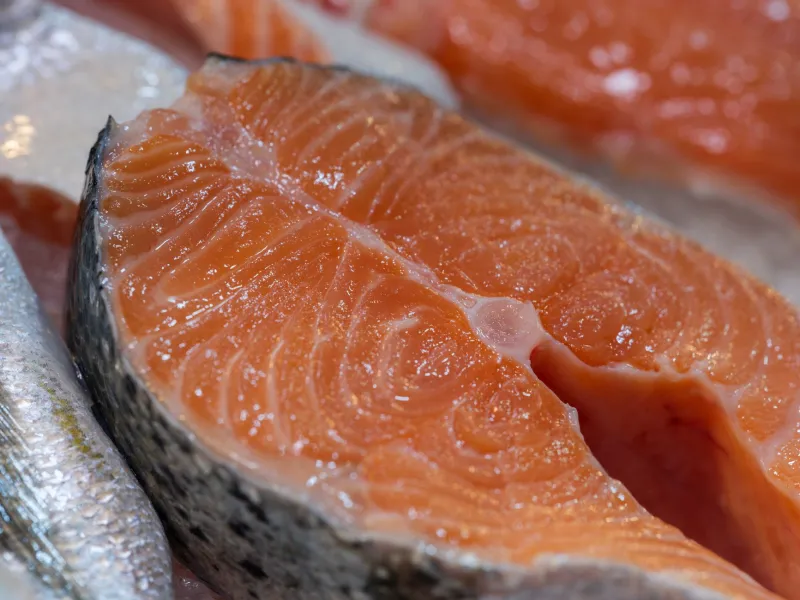
When a sommelier describes a Burgundy as expressing the limestone soils of the Côte de Nuits, no one in the room questions the premise. The idea that place imprints itself on flavor is, in the world of fine wine, accepted doctrine. Yet when a fishmonger at a San Francisco farmers' market offers two fillets of wild sockeye salmon side by side—one from the Kenai River, one from the Nushagak—most shoppers reach for whichever is priced lower, without pausing to consider that these two fish might be as culinarily distinct as a Chablis and a Meursault.
That oversight, argue a growing number of chefs, marine biologists, and sustainable seafood advocates, represents a fundamental failure of consumer education—and a missed opportunity for the kind of informed purchasing that sustains wild fisheries.
The Science of Salmon Terroir
The word terroir derives from the French terre, meaning earth, and it describes the totality of environmental conditions—soil, climate, topography, hydrology—that shape a product's character. Applied to salmon, the concept becomes remarkably precise.
Dr. Krista Oke, a fisheries ecologist who has studied population-level variation in Pacific salmon, explains that each river system effectively functions as a distinct evolutionary laboratory. "Salmon populations are locally adapted," she notes. "The fish returning to the Copper River have been selected over thousands of generations for the specific demands of that migration—the distance, the water temperature, the gradient of the river. Those selective pressures leave biological signatures that you can measure and, ultimately, taste."
Chief among those signatures is lipid content. Salmon that must travel hundreds of miles upriver against powerful currents—as Copper River kings do on their journey to spawning grounds in the Alaska Range—accumulate extraordinary reserves of omega-3 fatty acids prior to their migration. Fat is fuel, and these fish are loading up for a physiological marathon. The result, from a culinary standpoint, is a fillet of exceptional richness: deeply marbled, silky in texture, with a flavor that lingers on the palate in the manner of a well-aged olive oil.
By contrast, sockeye returning to the Wood River system feeding into Bristol Bay typically travel shorter distances to reach their spawning grounds. Their fat profiles, while still nutritionally superior to any farmed Atlantic salmon, are leaner and more restrained. The flavor is cleaner, more assertive—what chefs often describe as "bright" or "minerally"—with a firmer texture that holds up beautifully to high-heat preparations.
Seasonal Timing as a Flavor Variable
Provenance is not solely a matter of geography. The calendar matters enormously.
Wild salmon enter freshwater in a state of peak physiological condition, having spent years feeding in the nutrient-rich North Pacific. As they cease feeding and begin their upriver journey, their bodies begin converting stored fat into energy. A fish intercepted at the mouth of a river on the first day of a commercial opening is, in the most literal sense, a different product than a fish harvested from the same river three weeks later.
Chef Melissa Perello, who has long championed sustainable seafood sourcing at her San Francisco restaurant, describes the seasonal window as critical to her purchasing decisions. "I think about the early season fish from a river like the Copper as a luxury ingredient in the same category as dry-aged beef or first-press olive oil," she says. "The fat content, the color, the way it responds to heat—everything is at its peak. Two weeks later, from the same river, you have a perfectly fine fish, but it's a different conversation."
This temporal dimension creates a layered framework for understanding wild salmon that the generic label "wild-caught" entirely fails to capture. A sockeye harvested from the Kvichak River during the first week of July, at the height of the Bristol Bay run, represents a specific moment in a specific ecosystem—a snapshot of biological abundance that cannot be replicated or approximated by industrial aquaculture.
Reading the Label, and Beyond It
For American consumers accustomed to evaluating seafood primarily on price and species designation, developing fluency in salmon provenance requires a modest but meaningful shift in perspective.
The most actionable starting point is learning to ask—and insist upon—answers to three questions: What species? From which river system or region? And harvested during which portion of the season?
The Marine Stewardship Council's chain-of-custody certification provides a foundation of traceability, but it does not, by itself, communicate the granular provenance information that distinguishes a Copper River king from a Yukon River king. Several direct-to-consumer producers, many of them family fishing operations in Alaska, have begun offering this level of detail voluntarily—listing the specific district, the vessel, and in some cases the harvest date on their packaging or accompanying documentation.
Retailers including a growing number of independent fishmongers in coastal cities have begun following suit, training their staff to speak knowledgeably about river-level origin rather than simply reciting species names. At the Ferry Building Marketplace in San Francisco, vendors from established sustainable seafood purveyors have been known to display hand-lettered signs specifying not just "wild Alaskan sockeye" but the precise drainage from which a particular lot was sourced.
What Blind Tastings Reveal
The differences that scientists measure in the laboratory are, it turns out, perceptible to untrained palates.
A informal tasting organized by a Bay Area culinary school in 2023 presented participants with three preparations of wild sockeye from three distinct Alaskan river systems, all cooked identically—olive oil, salt, medium-high heat, identical resting time. Participants were asked to describe texture, richness, and flavor intensity without being told the origins of each sample.
The results were striking. Participants consistently ranked the fish from the longer-migration drainage as richer and more complex. The shorter-migration fish were described as firmer and more intensely flavored in a different register—more oceanic, less buttery. Virtually no participant described the three samples as interchangeable.
This is not a trivial finding. If consumers can perceive these differences, then the information required to make an informed choice—river system, season, migration distance—becomes not a piece of arcane data for enthusiasts but a practical tool for anyone who wants to spend their food dollars well.
The Conservation Argument
There is a dimension to this conversation that extends beyond gastronomy. When consumers learn to value salmon at the level of specific river populations, they develop a stake in the health of those populations that generic species-level labeling cannot create.
A shopper who has tasted the specific richness of a Copper River king and understands why that fish tastes the way it does—because of the particular demands of that particular migration, shaped by that particular watershed—is a shopper who has a reason to care whether the Copper River remains a functioning ecosystem. That emotional and intellectual connection between a consumer and a specific place is among the most durable foundations for conservation advocacy.
Wild salmon runs across the Pacific Northwest and Alaska are not abstractions. They are populations of locally adapted fish, shaped by specific rivers over millennia, producing flavors and nutritional profiles that no hatchery program or aquaculture operation can replicate. Treating them as interchangeable commodities—distinguishable only by species and price—diminishes both their culinary value and our incentive to protect them.
The salmon passport, if we choose to use it, tells us exactly where a fish has been. The more seriously we take that information, the better our chances of ensuring those rivers remain worth returning to.