Cold Water, Cool Planet: The Science Behind Wild Salmon's Surprisingly Small Carbon Footprint
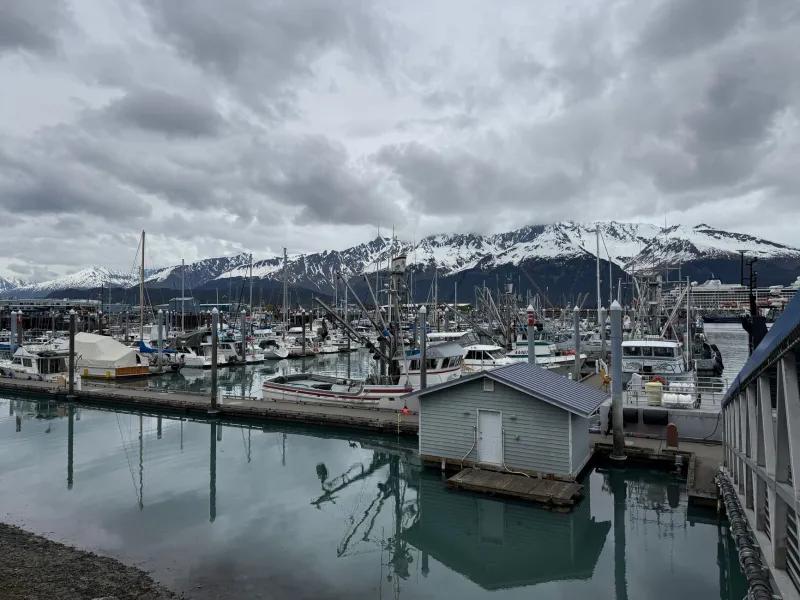
For years, the climate conversation around food has centered on a familiar hierarchy: red meat at the top of the emissions chart, plant proteins at the bottom, and everything else arranged somewhere in between. Wild-caught salmon, when it appears in these discussions at all, tends to be lumped loosely with "seafood" — a category that obscures more than it reveals. That imprecision matters, because the distinction between a wild Pacific Chinook hauled from Alaskan waters and a farmed Atlantic salmon raised in a Chilean net pen is not merely a question of flavor or ethics. It is, increasingly, a question of climate consequence.
A closer look at the science suggests that wild salmon deserves a far more prominent place in the climate-conscious consumer's pantry — and that its environmental credentials extend well beyond what appears on any nutrition label.
Measuring What Actually Matters: Lifecycle Emissions
The standard metric for comparing the climate impact of food is the carbon footprint expressed in kilograms of CO₂-equivalent per kilogram of edible protein. By this measure, beef is the well-documented villain, generating upwards of 60 kg CO₂e per kilogram of protein in many production systems. Pork and poultry fare better, typically ranging from 7 to 11 kg CO₂e. Legumes and tofu occupy the lower end of the spectrum, often below 3 kg CO₂e.
Where does wild-caught Pacific salmon land? Lifecycle assessments published in peer-reviewed journals, including a comprehensive 2021 analysis in the journal Nature Food, place wild-capture fisheries — particularly those in well-managed, low-trawling environments — at roughly 2 to 5 kg CO₂e per kilogram of protein. The primary emissions driver is fuel consumption aboard fishing vessels. When those vessels are smaller-scale, as is common in Alaskan day-boat and drift-net operations, emissions drop further still.
This places well-managed wild salmon in direct competition with chicken on a per-protein basis — and it accomplishes this without the land use, freshwater consumption, or antibiotic inputs that characterize industrial poultry production.
The Ocean as Carbon Ledger
The emissions accounting alone would be compelling enough. But the climate case for wild salmon becomes substantially more interesting when one examines the ecosystems those fish inhabit and sustain.
Cold-water marine environments — the North Pacific, the Bering Sea, the coastal waters of British Columbia and Southeast Alaska — are among the most productive carbon sinks on Earth. Phytoplankton in these regions absorb atmospheric CO₂ at rates that rival terrestrial forests. When phytoplankton die, a portion of the carbon they have absorbed sinks to the deep ocean floor in a process oceanographers call the biological carbon pump. Salmon, as mid-trophic predators, are integral to the food web that sustains these phytoplankton blooms.
The connection runs deeper still. Pacific salmon are anadromous — they are born in freshwater, mature in the ocean, and return to their natal rivers to spawn and die. Their decomposing carcasses deliver marine-derived nutrients, including nitrogen and phosphorus, deep into riparian and forest ecosystems. Decades of research have documented how salmon-derived nutrients feed streamside vegetation, which in turn stabilizes riverbanks, shades cold-water habitat, and sequesters additional carbon in woody biomass and soil. In this sense, a healthy wild salmon population is not merely a beneficiary of a functioning ecosystem — it is an active participant in maintaining one.
Supporting wild salmon fisheries, then, is not simply a matter of choosing a low-emission protein. It is an act of investment in the ecological infrastructure that keeps cold-water carbon sinks intact.
Where Farmed Salmon Falls Short
The contrast with aquaculture is instructive, and it is worth drawing clearly. Farmed Atlantic salmon — the product most commonly sold in American supermarkets under the generic label "salmon" — carries a significantly different environmental profile. Feed conversion ratios, the energy required to manufacture and transport fishmeal and fish oil, the methane produced by sea-lice treatments, and the coastal habitat disruption associated with open-net pen operations all contribute to a lifecycle footprint that many assessments place between 6 and 12 kg CO₂e per kilogram of protein.
More critically, open-net aquaculture poses direct threats to the wild salmon populations whose ecological services we have described above. Disease transmission, genetic dilution through escapes, and competition for forage fish between feed operations and wild predators all represent pathways by which industrial aquaculture can undermine the very ecosystems that make wild salmon climatically valuable in the first place.
This is not an argument against all aquaculture. Closed-containment systems and responsibly managed shellfish operations represent genuinely promising frontiers. It is, however, a reason to be precise about what we mean when we reach for a piece of salmon — and to understand that the label does not always tell the full story.
The Bay Area's Particular Responsibility
For consumers along the California coast, these considerations carry additional weight. The San Francisco Bay Area sits at the southern edge of the Pacific salmon's historic range, and the Sacramento River system — which flows into the Bay — once supported one of the largest Chinook runs on the continent. Decades of dam construction, agricultural water diversion, and habitat degradation have reduced those runs dramatically. The salmon that do return are a testament to the resilience of the species and to the conservation investments that have kept them viable.
When Bay Area consumers choose wild-caught Pacific salmon — sourced from well-managed Alaskan fisheries or, when available, from California's own recovering runs — they are participating in a market signal that reaches all the way to fishery management decisions. Consumer demand for certified, traceable wild salmon supports the economic case for maintaining sustainable catch limits, investing in habitat restoration, and resisting pressure to expand industrial aquaculture in sensitive coastal zones.
Making the Climate-Conscious Choice
The practical implications of this science are straightforward, if not always simple to act upon. When selecting salmon, prioritize products bearing the Marine Stewardship Council (MSC) certification, which requires independent verification of sustainable catch practices. Seek out Alaskan-origin salmon — sockeye, Chinook, coho, pink, and chum — from fisheries that operate under the rigorous management framework of the Alaska Department of Fish and Game, widely regarded as a global model for sustainable wild capture.
Ask your fishmonger about vessel type and harvest method. Hook-and-line and drift-net operations generally carry lower per-fish fuel costs than large-scale trawling. When purchasing online, look for direct-to-consumer suppliers who can provide documentation of where and how their fish was caught.
The climate kitchen is not built on deprivation. It is built on precision — on understanding that the choices we make at the fish counter ripple outward into ecosystems, fishing communities, and atmospheric carbon budgets in ways that are measurable, meaningful, and well within our power to influence.
Wild salmon is not a perfect food. No food is. But as a protein source whose harvest, when managed responsibly, actively sustains the marine ecosystems that help regulate our climate, it occupies a genuinely distinctive position on the table. That distinction is worth understanding — and worth protecting.