The Hidden Invoice: What Farmed Salmon Actually Costs When the Environmental Bill Comes Due
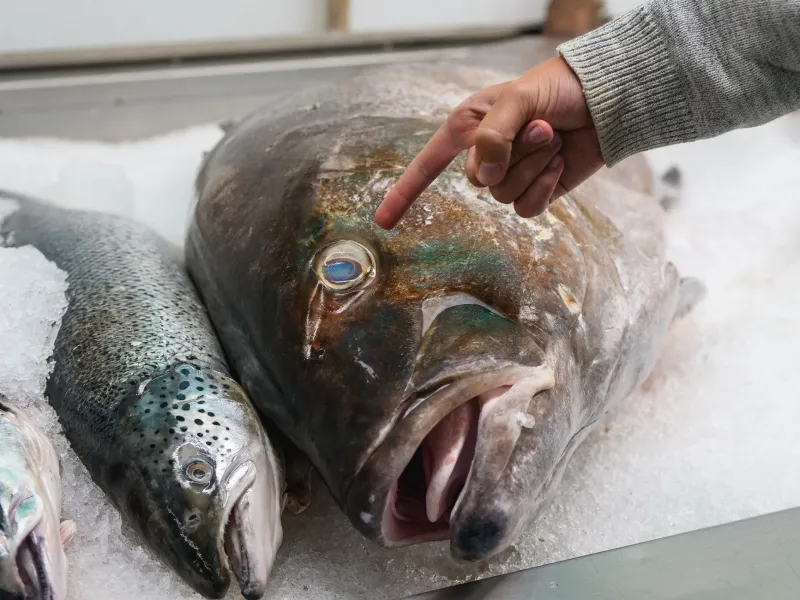
The number printed on a grocery store placard has a way of ending conversations before they begin. Farmed Atlantic salmon, widely available at $8 to $12 per pound, appears to undercut its wild-caught counterpart by a margin that feels decisive. Wild Alaskan sockeye or king salmon, priced anywhere from $18 to $35 per pound depending on the season and source, can seem like a luxury reserved for special occasions. That comparison, however, rests on a fiction — one that is costing American consumers, coastal communities, and public ecosystems far more than any premium seafood purchase ever could.
The discipline of environmental economics has a term for this phenomenon: externalized costs. These are the real expenses of production that a company does not pay directly but that society absorbs through pollution remediation, public health expenditures, regulatory enforcement, and ecological degradation. In the salmon industry, externalized costs are not marginal line items. They are, by several credible estimates, larger than the market value of the product itself.
What the Sticker Price Omits
Conventional open-net pen aquaculture — the dominant model for Atlantic salmon farming in markets supplying American consumers, primarily from operations in Norway, Chile, and Canada — operates within a regulatory environment that has historically permitted producers to treat adjacent marine ecosystems as free waste-processing infrastructure. Nutrient runoff from concentrated fish waste, uneaten feed pellets, and chemical treatments settles onto the seafloor beneath farm pens, creating hypoxic dead zones that can persist for years after a facility is relocated or shuttered.
A 2021 study published in the journal Reviews in Aquaculture estimated that the nitrogen and phosphorus loading from a single mid-sized Atlantic salmon farm is functionally equivalent to the untreated sewage output of a town of several thousand people. In the United States, municipalities pay billions annually to treat comparable nutrient loads before they reach waterways. Salmon farms, operating in marine environments beyond the reach of many Clean Water Act provisions, often do not.
The cleanup of degraded marine environments adjacent to aquaculture operations, where it happens at all, is typically funded through public conservation budgets — meaning that American taxpayers subsidize the environmental footprint of imported farmed salmon without any corresponding reduction in the retail price they pay.
The Disease Economy
Perhaps no externalized cost in the farmed salmon industry is more consequential — or more deliberately obscured — than the disease burden imposed on wild fish populations. Sea lice, the parasitic copepods that proliferate in the dense conditions of net-pen aquaculture, have been documented migrating from farm environments to wild juvenile salmon passing through adjacent migratory corridors. Research conducted along the British Columbia coast, where Pacific salmon share waters with Atlantic salmon farms, has linked elevated sea lice loads to measurable declines in wild pink and coho salmon returns.
The economic value of those lost wild fish — measured in commercial fishing revenue, tribal subsistence rights, sport fishing tourism, and the ecological services that salmon carcasses provide to river and forest systems — is not reflected in the price of a farmed fillet. It is absorbed by fishing families who find their catches diminished, by state and federal agencies that fund disease monitoring and mitigation programs, and by the rivers themselves, which receive fewer nutrient inputs when salmon runs contract.
In California, where the Sacramento and Klamath river systems support Chinook salmon populations of immense cultural and commercial importance, the state has spent hundreds of millions of dollars over the past two decades on salmon recovery efforts that are, in part, a response to cumulative ecosystem stressors. Disease pressure originating in aquaculture environments hundreds of miles away is one variable among many — but it is a variable that the farmed salmon industry has never been asked to price into its product.
Carbon Arithmetic That Doesn't Add Up
The carbon footprint of farmed salmon is a subject the industry has worked energetically to complicate, but the underlying numbers are not particularly ambiguous. Atlantic salmon farming is an energy-intensive enterprise. Feed production — which typically involves harvesting wild forage fish such as anchovies and herring, rendering them into fishmeal and fish oil, and shipping the resulting product across ocean supply chains — accounts for the majority of aquaculture's greenhouse gas emissions. Processing, refrigeration, and transcontinental transport to American markets add further to the total.
Life cycle analyses published in peer-reviewed journals have placed the carbon footprint of farmed Atlantic salmon at between 3.5 and 6.0 kilograms of CO₂ equivalent per kilogram of product, depending on the source region and production method. Wild-caught Alaskan salmon, harvested in one of the world's most carefully managed fisheries and processed in facilities that have increasingly adopted renewable energy sources, typically registers between 1.0 and 2.5 kilograms of CO₂ equivalent per kilogram. The gap is not trivial.
As the United States moves — however haltingly — toward pricing carbon emissions through regulatory mechanisms, those embedded emissions will eventually translate into real costs. Consumers who choose wild-caught salmon today are, in a meaningful sense, prepaying for a lower-carbon food system rather than deferring that expense to future public budgets.
The Subsidy Structure Nobody Talks About
Beyond pollution and disease, farmed salmon benefits from a structural subsidy that operates largely beneath public awareness: preferential access to shared marine resources. Open-net pen aquaculture occupies public waters — in the United States, typically governed by Army Corps of Engineers permits and state leasing arrangements — at rates that bear no relationship to the commercial value generated. The occupation of these commons by private aquaculture operations excludes competing uses, including wild fishing, recreational access, and habitat conservation, without compensating the public for that exclusion.
Norwegian aquaculture companies, which supply a significant share of the farmed salmon consumed in the United States, have benefited for decades from Norwegian government investment in research, infrastructure, and export promotion. That public investment is embedded in the competitiveness of their product on American shelves. When an American consumer chooses Norwegian farmed salmon over Alaskan wild salmon, they are, indirectly, subsidizing a foreign industry that has externalized its environmental costs onto Norwegian fjords, Chilean coastal communities, and the shared global atmosphere.
Recalculating the Real Price Per Serving
None of this is to suggest that wild salmon is without environmental impact. Commercial fishing carries its own footprint, and responsible stewardship of wild fisheries demands constant vigilance. The Alaska Department of Fish and Game, which manages the state's salmon fisheries under a constitutional mandate for sustained yield, operates one of the most rigorously science-based fisheries management systems in the world. That management costs money — but it is money spent preserving a self-renewing natural resource rather than subsidizing the degradation of one.
When a consumer pays $24 per pound for wild Alaskan sockeye, they are paying a price that, while higher than the farmed alternative at the register, does not carry a deferred invoice for ecosystem restoration, disease mitigation, carbon remediation, or public health externalities. The farmed salmon priced at $10 per pound carries all of those deferred costs — they simply arrive in a different envelope, addressed to a different recipient.
The salmon paradox, then, is not really a paradox at all. It is an accounting error — one that the market has been slow to correct but that conscious consumers are increasingly equipped to resolve on their own terms. Choosing wild-caught, responsibly sourced salmon is not an act of indulgence. It is an act of accurate pricing.
The real luxury, it turns out, is the one that someone else pays for.