Cold Season, Bold Flavor: How West Coast Restaurants Are Rewriting the Salmon Calendar
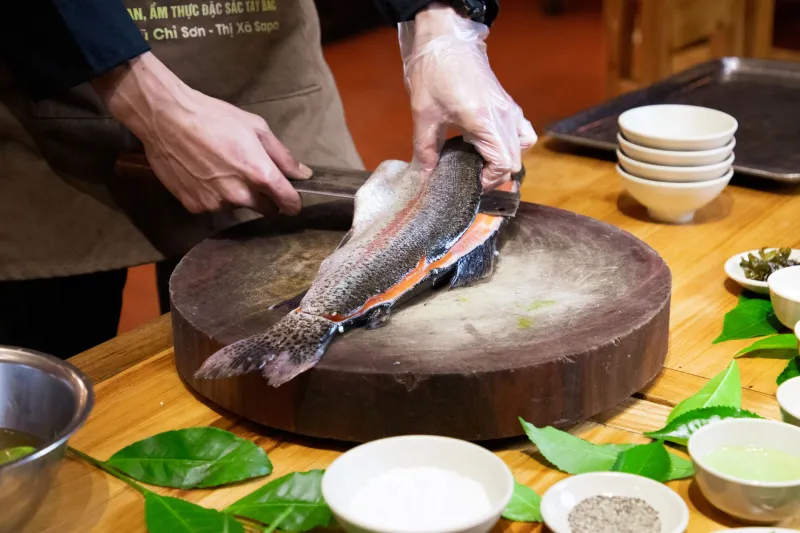
For generations, the American dining calendar has treated wild salmon as a warm-weather proposition. From Memorial Day through Labor Day, restaurant menus from San Francisco to Seattle have blazoned the words "fresh wild salmon" as a reliable signal of summer abundance. The assumption has been so deeply embedded in culinary culture that questioning it felt almost heretical.
Yet a cohort of West Coast chefs is doing precisely that—and the results are reshaping how premium restaurants think about salmon sourcing, menu design, and the very definition of peak quality.
Rethinking "Peak Season"
The conventional wisdom is straightforward on its surface: Pacific salmon runs peak in summer, fish are abundant and accessible, and restaurants respond accordingly. But that narrative, several chefs argue, flattens a far more nuanced biological reality.
"Summer abundance and summer quality are not the same thing," says one executive chef at a James Beard–recognized restaurant in San Francisco's Hayes Valley neighborhood. "When you're pulling fish out of the water during a massive run, you are often catching animals that are burning through their fat reserves, navigating warming river temperatures, and moving fast. The fish can be beautiful, but the eating quality is variable in ways that most diners never get to examine."
Winter-caught salmon—primarily species harvested in offshore troll fisheries along the Pacific Coast during the colder months—presents a physiologically distinct product. These fish, which include coho and certain Chinook populations, are typically intercepted before they begin their freshwater migration, while their fat reserves remain intact and their flesh has not yet begun the metabolic transformation associated with spawning. The result, according to both chefs and food scientists, is a fish with a markedly different flavor profile: richer, more deeply pigmented, and with a fat distribution that responds magnificently to high-heat cooking techniques.
The Science Behind the Switch
The flavor differences are not merely subjective. Research into salmon lipid composition has consistently demonstrated that the ratio of omega-3 fatty acids to total fat content fluctuates significantly across a fish's life cycle and across seasons. Winter-caught fish, particularly those harvested in offshore waters before the physiological demands of spawning begin, tend to exhibit higher concentrations of the intramuscular fat that translates directly to the buttery, complex flavor that chefs prize.
Beyond fat content, water temperature plays a meaningful role. Colder ocean conditions slow cellular metabolism in ways that affect both texture and flavor compound development. Chefs who have conducted side-by-side comparisons describe winter fish as having a "cleaner" finish—less of the minerality that can tip into fishiness in warmer-water catches—and a flesh that holds its structure under heat without the tendency toward dryness that can afflict leaner summer fish.
"I did a blind tasting for my kitchen team last February," recalls a chef-owner whose Portland restaurant has earned consistent national recognition. "I put a well-sourced summer Chinook next to a winter-caught coho from a small troll operation out of Eureka. The room was divided, but the people who preferred the winter fish were almost uniformly the ones who cook salmon most frequently. They noticed things that take experience to see."
Supply Chain Ingenuity
Adopting winter salmon as a menu anchor requires more than culinary conviction. It demands a fundamental restructuring of sourcing relationships and a willingness to engage with a supply chain that operates on different rhythms than the industry-standard summer model.
Several pioneering restaurants have responded by building direct relationships with small-boat troll fishermen who operate year-round along the California, Oregon, and Washington coasts. These fishermen, often working independently or through small cooperatives, have historically struggled to command premium prices for winter catches simply because the market infrastructure to support them was underdeveloped. The shift in restaurant demand is beginning to change that calculus.
"We started taking winter deliveries three years ago from a family operation out of Bodega Bay," says a procurement director at a multi-unit restaurant group based in Los Angeles. "The first year was logistically challenging—we had to rethink our storage protocols and our communication with the kitchen about availability windows. By the second year, it felt completely natural. By the third, we were planning our winter menu around it rather than treating it as a supplement."
This kind of direct sourcing also carries meaningful sustainability implications. Troll-caught salmon, harvested one fish at a time using hook-and-line methods, is widely regarded as among the most selective and low-impact commercial fishing techniques available. By shifting demand toward winter troll operations, restaurants are effectively channeling economic support toward fishing practices that minimize bycatch, reduce habitat disruption, and support the kind of small-scale fishing communities that have historically been the backbone of responsible Pacific fisheries management.
What Guests Are Discovering
The customer response, chefs report, has been instructive. In many cases, diners who have grown accustomed to dismissing salmon as a predictable menu option are encountering the fish as though for the first time.
"I've had guests tell me they don't like salmon, and then order it because nothing else caught their eye, and then come back the following week and ask specifically if we still have it," says the Hayes Valley chef. "That's not a coincidence. That's a fish that's doing something on the plate that the salmon they grew up eating was not doing."
The educational dimension of the shift matters, too. Restaurants that foreground the provenance and seasonality of their winter salmon—explaining on the menu or through server narratives that the fish was caught by a specific vessel using troll methods in cold offshore waters—are finding that guests engage with that information enthusiastically. In an era when conscious consumers are increasingly attentive to the ethical and environmental dimensions of their food choices, specificity about sourcing functions as a form of hospitality.
A New Seasonal Logic
The broader implication of this culinary movement extends beyond the restaurant industry. If the most respected kitchens on the West Coast begin treating winter salmon as a premium seasonal product rather than an off-season fallback, they create the conditions for a broader cultural re-education about what responsible, high-quality seafood consumption actually looks like.
That re-education aligns closely with the principles that have always animated the wild salmon conservation community: that the best fish comes from healthy, well-managed ecosystems; that fishing methods matter as much as the species being harvested; and that seasonality, properly understood, is not a limitation but a form of ecological honesty.
The summer salmon run is not going anywhere. It remains one of the great natural spectacles of the Pacific Coast, and the fish it produces, sourced carefully, can be extraordinary. But the chefs rewriting their menus this winter are making a more subtle and perhaps more important argument: that truly understanding wild salmon means following it through the full arc of its year—and discovering, in the process, that the cold months have their own remarkable gifts to offer.