From Farm to Wild: How America's Most Demanding Chefs Made the Switch—and Never Looked Back
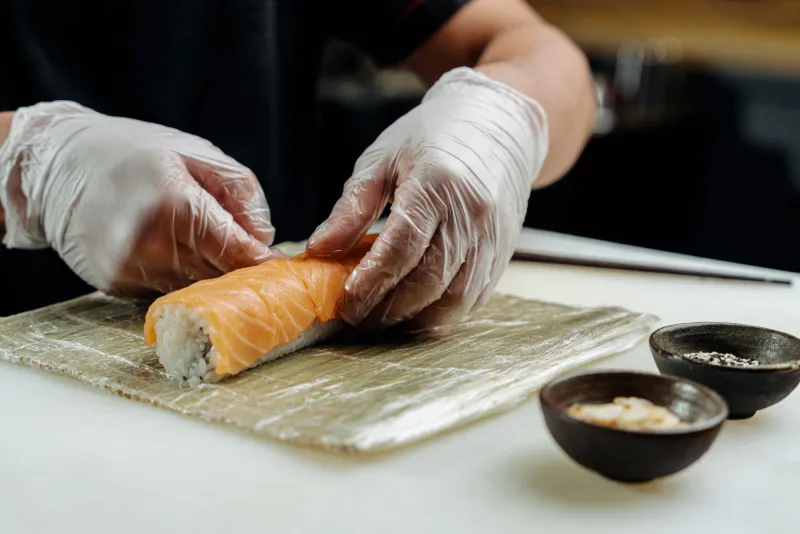
For years, farmed Atlantic salmon occupied a peculiar position in the American culinary establishment: universally available, aggressively priced, and quietly tolerated by chefs who suspected something was wrong but couldn't quite justify the disruption of changing course. That era, according to a growing number of professional cooks, is drawing to a close.
Across the country—from Pacific Coast bistros to New England farm-to-table institutions—head chefs are making the deliberate, often costly, and occasionally contentious decision to remove farmed salmon from their menus entirely. Their reasons vary in emphasis but converge on the same essential conclusion: wild-caught salmon is not a premium indulgence. It is the standard that the profession should have insisted upon all along.
The Moment the Scales Tipped
For Marcus Delray, executive chef at a well-regarded Pacific Northwest restaurant, the turning point arrived unexpectedly during a routine prep session. A delivery of farmed Atlantic salmon had arrived, as it did every week, and he was slicing through the flesh when he noticed the color—artificially vivid, almost aggressively pink in a way that felt manufactured rather than earned.
"I'd been cooking with it for a decade," he recalls. "I knew intellectually that the color came from synthetic astaxanthin added to the feed. But that morning, for some reason, it just stopped me. I thought: what else am I not looking at?"
What followed was several months of research that he describes as genuinely unsettling. He read about the environmental consequences of open-net pen aquaculture—sea lice infestations, antibiotic use, effluent discharge into coastal waters, and the genetic contamination risks to wild populations from farmed fish escapes. He consulted with fisheries scientists. He visited a direct-from-vessel Alaskan supplier he'd been ignoring for years.
"By the time I finished that process," he says, "I felt like I owed my guests an apology."
His experience is not unusual. Chef Renata Osei, who operates a mid-sized contemporary American restaurant in Chicago, describes a similar awakening triggered not by research but by a blind tasting she organized for her kitchen staff. She placed wild Sockeye alongside the farmed Atlantic she'd been purchasing for years, presented without labels or context.
"The staff didn't need to be told which was which," she says. "The wild fish tasted like something. The farmed fish tasted like a texture."
The Operational Reality of Going Wild
Sentiment, however principled, does not resolve a restaurant's purchasing logistics. Wild salmon is seasonal, regionally variable, and subject to the unpredictability of natural fish runs. Farmed Atlantic arrives year-round, in consistent sizes, at predictable prices. Abandoning it requires a kitchen to rethink not just one line item on the menu but an entire operational philosophy.
"The first thing I had to accept," says Delray, "was that I was no longer going to be able to offer salmon fifty-two weeks a year. And that was genuinely frightening from a business perspective."
The adjustment required what he calls a seasonal menu discipline—structuring offerings around what is actually running, rather than what the industrial supply chain makes perpetually available. Chinook from Alaska's Copper River in late spring. Sockeye through the summer months. Coho into the fall. Each species distinct in fat content, texture, and flavor profile, demanding different preparation techniques and different communication with guests.
Osei took a different approach. Rather than removing salmon from the menu during off-season months, she invested in relationships with suppliers offering responsibly frozen wild-caught product—Alaskan salmon harvested at peak season and flash-frozen aboard the vessel. "The quality," she says, "is genuinely superior to fresh farmed. That surprised me at first. Now it seems obvious."
Both chefs acknowledge that the transition involved real financial friction. Wild-caught salmon commands a higher per-pound price than farmed Atlantic, and that differential must be absorbed somewhere—either in menu pricing, in portion adjustment, or in operational efficiency elsewhere. Neither pretends the math is painless.
"What I tell other chefs," Osei says, "is that you're not just buying fish. You're buying a story you can tell with integrity. And in today's dining environment, that has measurable value."
What Diners Are Actually Responding To
The consumer dimension of this shift is worth examining carefully. American diners, particularly in urban markets, have become increasingly sophisticated about sourcing—not merely as a lifestyle preference but as an expression of values. The chef who can speak credibly about where their salmon was caught, by whom, and under what conditions is offering something that no farmed product can replicate: genuine provenance.
Delray reports that his servers now receive more questions about the salmon's origin than about almost any other item on the menu. "People want to know the name of the fishery. They want to know the species. They want to understand why it tastes different from what they've had before. That conversation is now a selling point."
This is not mere marketing theater. When a kitchen sources from a specific Alaskan fishing family or a certified sustainable fishery operating under rigorous management protocols, it is participating in an ecosystem—economic and ecological—that has real consequences for the health of wild fish populations and the communities that depend on them. Diners who understand this are not simply purchasing a meal. They are registering a preference with material effects.
Lessons for the Home Cook
The professional kitchen's journey toward wild salmon carries practical lessons for home cooks navigating the same decision. The barriers are real but surmountable.
Seasonal availability need not be a limitation if approached with curiosity rather than frustration. Flash-frozen wild Alaskan salmon, available through community-supported fishery programs and an expanding roster of direct-to-consumer suppliers, offers quality that rivals—and frequently surpasses—fresh farmed alternatives. Learning to distinguish species—Chinook's rich fat content, Sockeye's firm texture, Coho's mild versatility—transforms purchasing from a passive transaction into an informed choice.
Price remains the most commonly cited obstacle, but chefs like Osei argue that the framing is often wrong. "When you buy better fish, you cook it more carefully. You waste less. You serve smaller portions because the flavor is more concentrated. The economics shift when you stop treating it as a commodity."
A Profession Catching Up to Its Own Values
The American culinary profession has spent decades championing local produce, heritage breeds, and small-scale agriculture. Wild salmon represents the aquatic expression of those same commitments—a food that is healthiest when its ecosystem is healthy, most flavorful when harvested at the right moment from clean, cold water, and most meaningful when the people who caught it are treated as partners rather than suppliers.
The chefs converting from farmed to wild are not, by and large, ideologues. They are pragmatists who followed the evidence to its logical conclusion. What they found on the other side was not sacrifice but revelation: fish that tastes the way fish is supposed to taste, sourced in a way they can defend without qualification.
"I spent ten years serving something I was embarrassed to talk about," Delray says. "Now I can't stop talking about the salmon. That's the difference."
For an industry built on the premise that what you serve matters—to the diner, to the producer, to the land and water from which it comes—that distinction is not a minor upgrade. It is the entire point.