What Your Fishmonger Isn't Telling You: The Seasonal Truth Behind Peak Wild Salmon
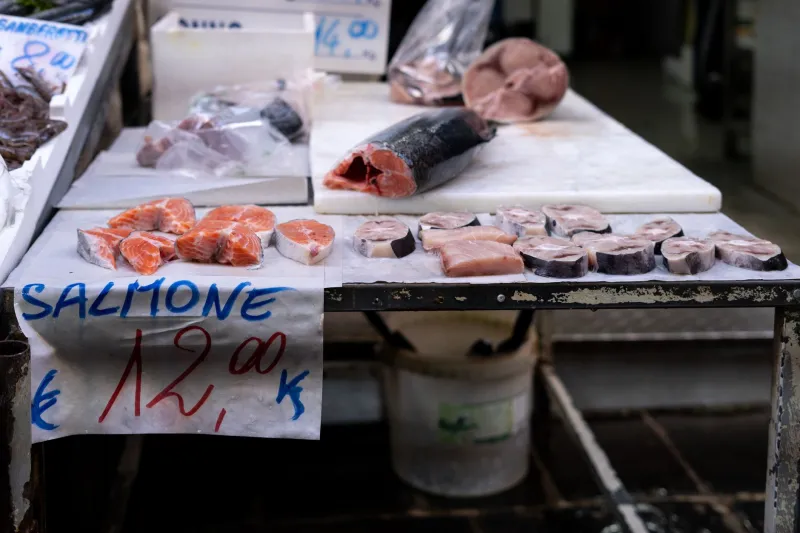
Walk into nearly any well-stocked American grocery store on any day of the year and you will find salmon in the seafood case. It will be pink, often glistening, and almost certainly labeled with some variation of the word "fresh." What you are unlikely to find is any indication of whether the fish in front of you was caught at the biological peak of its life cycle — or harvested during a period when quality has measurably declined. That distinction, it turns out, is one of the most commercially inconvenient truths in the seafood industry.
The gap between what professional buyers and restaurant chefs know about salmon seasonality and what gets communicated to home consumers is not accidental. It is, in many respects, structural.
The Biology the Bin Tag Leaves Out
Wild Pacific salmon are anadromous fish, meaning they are born in freshwater rivers, migrate to the ocean to mature, and return to their natal streams to spawn and die. The critical detail for anyone concerned with eating quality is this: as salmon transition from ocean feeding to their freshwater spawning migration, their bodies undergo a dramatic physiological transformation. Fat reserves — the very compounds responsible for rich flavor, silky texture, and the omega-3 fatty acids that make wild salmon nutritionally exceptional — are progressively metabolized to fuel the upstream journey.
A Chinook salmon intercepted in the ocean during peak feeding season, fat-rich and silver-bright, is a fundamentally different food product than one caught weeks later after it has begun its spawning run in earnest. The former carries fat content that can exceed 20 percent by weight in premium specimens. The latter may have shed much of that richness in service of reproduction.
Chefs at fine dining establishments in San Francisco, Seattle, and New York have long understood this distinction. Procurement professionals at high-end restaurants track run timing with the same attention that sommeliers give to vintage calendars. They know, for instance, that Copper River Chinook arriving in mid-May represents a narrow, extraordinary window — and that the same river's fish arriving in early July, while still excellent, reflects a different moment in the biological calendar.
Your fishmonger, statistically speaking, is not having this conversation with you.
Why Retail Markets Stay Quiet
The incentive structure of retail seafood is not designed around seasonal education. It is designed around year-round throughput. Supermarket seafood departments operate on thin margins and high volume. The moment a retailer begins communicating that salmon purchased in, say, late October may be nutritionally and gastronomically inferior to fish purchased in June, they create a demand problem they cannot solve — because the calendar does not accommodate that preference.
Farmed salmon, which dominates the retail market at roughly 70 percent of US salmon sales, compounds this problem. Farmed fish are harvested on a production schedule entirely disconnected from biological seasonality. Their consistent fat content — achieved through controlled feeding regimens rather than wild feeding ecology — makes them a reliable commodity. Retailers can move farmed Atlantic salmon in January with the same confidence as in July. Wild salmon, with its authentic seasonal variation, is far more complicated to merchandise.
The result is a retail environment that has effectively trained consumers to think of salmon as a year-round, seasonally neutral protein. This framing serves the industry. It does not serve the consumer.
The Restaurant Knowledge Gap
Spend time speaking with the purchasing teams at serious seafood-focused restaurants and a strikingly different picture emerges. These professionals speak fluently about run timing, harvest windows, and the specific attributes of fish caught at different points in the migratory cycle. They build menus around availability rather than demanding that supply accommodate their menus.
At the retail level, this expertise rarely reaches the counter. Many grocery store seafood department employees receive minimal training on the provenance and biological context of the fish they sell. They can often tell you the species and the geographic origin. They are far less likely to tell you the harvest date, the specific fishing district, or whether the fish was caught early in a run — when ocean-condition fish are most likely to be available — or later, when spawning physiology has begun to alter quality.
This is not a criticism of individual fishmongers, many of whom are knowledgeable and passionate. It is an observation about what the retail system rewards them for communicating.
What You Should Actually Be Asking
Informed consumers can begin to close this gap by asking better questions at the counter. The following checklist represents the kind of inquiry that separates a quality purchase from a guess.
Ask for the harvest date, not just the "fresh" label. "Fresh" is a marketing term with no standardized regulatory definition in the retail seafood context. A fish harvested three weeks ago and kept on ice may legally be sold as fresh. The harvest date is the only number that matters.
Ask whether it is ocean-caught or river-caught. Ocean-caught fish intercepted before they begin their spawning migration will generally carry superior fat content and flavor. Fish caught in-river, closer to spawning, will have begun metabolizing those reserves. Both have culinary uses, but they are not equivalent products.
Ask about the specific run or fishery. Copper River, Yukon River, Bristol Bay, Kodiak — these are not interchangeable designations. Each represents a distinct fishery with its own run timing and quality profile. A retailer who can answer this question with specificity is one who has a meaningful relationship with their supply chain.
Ask when peak season is for the species on offer. For Chinook, peak quality windows typically run from late spring through midsummer depending on the fishery. Sockeye runs peak from late June through July in many Alaskan systems. Coho arrives in late summer and early fall. If a retailer cannot speak to these windows, that itself is informative.
Ask whether the fish has been previously frozen. Flash-frozen wild salmon caught at peak season and properly thawed is often superior to "fresh" fish that has been traveling the supply chain for an extended period. Do not allow the cultural stigma around frozen fish to deprive you of the best product available.
Demanding More From the Supply Chain
The broader solution to retail salmon opacity is not merely consumer vigilance — though that matters. It is systemic pressure on retailers and distributors to provide the kind of provenance transparency that the best direct-to-consumer seafood companies have demonstrated is entirely feasible.
Fishing families and small-scale Alaskan processors who sell directly to consumers have shown that harvest date, fishing district, vessel name, and even the specific skipper can be communicated at the point of sale without extraordinary cost. When consumers begin demanding this information from supermarkets with the same expectation they bring to craft beer or single-origin coffee, the retail calculus will shift.
Wild salmon is not a commodity. It is a seasonal, place-specific, biologically complex food with a quality arc that rewards attention and punishes ignorance. The fishmonger who tells you when wild salmon is truly at its peak is not undermining their business. They are building the kind of trust that turns a one-time purchase into a lifelong relationship with the most extraordinary fish in American waters.
Ask the questions. Expect the answers. The fish — and the fishermen who caught it responsibly — deserve nothing less.