The Real Price of Salmon: How Wild-Caught Beats Farmed When You Actually Run the Numbers
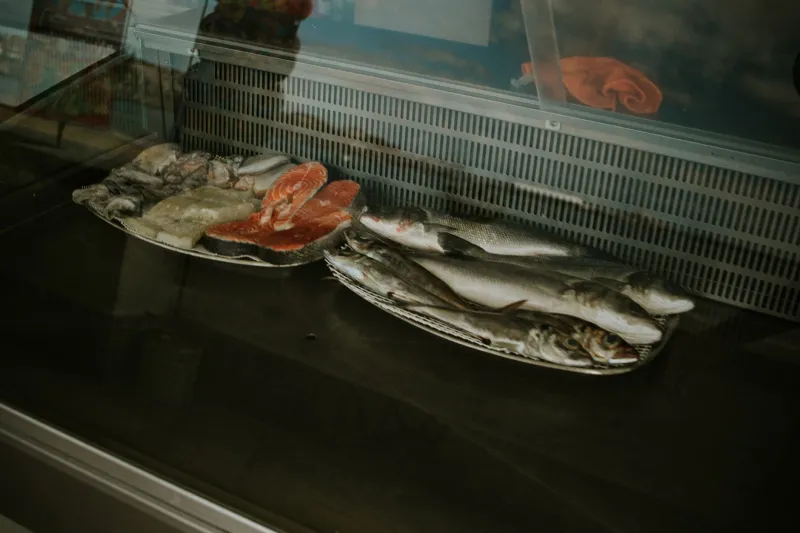
Walk into nearly any American grocery store and the arithmetic appears straightforward. Farmed Atlantic salmon fillet: $8.99 per pound. Wild Alaskan sockeye: $14.99 per pound. For a family already stretching its grocery budget, the choice seems obvious. But that sticker-price comparison is, at best, incomplete — and at worst, a quiet deception that costs conscientious households real money every single week.
When you commit to the full accounting — factoring in cooking shrinkage, fat composition, protein density, and the frequency with which each product actually satisfies — the economics of wild salmon undergo a remarkable transformation. The fish that appears extravagant on the shelf frequently proves to be the more prudent purchase by the time it reaches the dinner table.
The Shrinkage Problem Nobody Talks About
All fish loses moisture during cooking. The critical variable is how much — and farmed Atlantic salmon, with its substantially higher fat content, surrenders a disproportionate share of its starting weight to the pan.
Studies examining cooking yield in salmon consistently show that farmed Atlantic salmon can lose between 25 and 35 percent of its raw weight during standard cooking methods such as baking, pan-searing, or broiling. Wild sockeye and Chinook, which carry leaner muscle profiles and lower intramuscular fat, typically lose between 18 and 24 percent under identical conditions.
Applied to a practical household scenario, this distinction is meaningful. A one-pound fillet of farmed salmon at $8.99 may yield as little as 10.4 ounces of cooked, edible fish. A one-pound fillet of wild sockeye at $14.99 routinely yields 12.5 ounces or more. Suddenly, the effective cost-per-edible-ounce narrows considerably — and in many real-world purchasing situations, wild salmon emerges as the superior value before a single nutritional consideration enters the picture.
Protein and Satiety: The Hidden Multiplier
The farmed-versus-wild comparison becomes even more revealing when nutritional density enters the equation. Wild salmon — particularly sockeye, coho, and Chinook — delivers meaningfully higher concentrations of protein per calorie than its farmed counterpart. Farmed Atlantic salmon derives a greater proportion of its caloric load from fat, much of which originates in the high-grain, soy-heavy aquaculture feed that dominates the industry.
This distinction has a practical consequence that household budgets feel directly: satiety. A 4-ounce serving of wild sockeye, with its denser protein structure and leaner composition, tends to satisfy hunger more completely than an equivalent portion of farmed fish. Families who make the switch frequently report that portion sizes naturally decrease — not from discipline, but from genuine fullness.
If a household previously required six ounces of farmed salmon to feel satisfied and finds that four ounces of wild salmon accomplishes the same result, the effective cost-per-meal calculation shifts dramatically. At those consumption ratios, a household spending $14.99 per pound on wild sockeye may be spending less per satisfying meal than one purchasing farmed fish at $8.99.
What the Omega-3 Ratio Actually Means for Your Wallet
Beyond protein, wild salmon's omega-3 fatty acid profile carries financial implications that extend well beyond the dinner plate. Wild Pacific salmon consistently delivers higher concentrations of EPA and DHA — the long-chain omega-3s associated with cardiovascular health, cognitive function, and inflammatory response — relative to its caloric content than farmed alternatives.
Farmed salmon, fed rations that increasingly substitute fish meal with plant-based ingredients, has seen its omega-3 concentration decline measurably over the past two decades, according to research published in peer-reviewed nutrition journals. Meanwhile, the omega-6 to omega-3 ratio in farmed fish has shifted in a direction that many nutrition researchers consider nutritionally unfavorable.
For American consumers who separately purchase omega-3 supplements — a market worth billions of dollars annually — the relevance is direct. A household that replaces a suboptimal farmed salmon serving with a nutrient-dense wild serving may be reducing its need for supplemental fish oil. At $20 to $40 per month for quality omega-3 capsules, that offset belongs in any honest cost comparison.
The Waste Equation
Farmed salmon also tends to generate more plate waste, for reasons that are partly textural and partly psychological. The softer, fattier flesh of aquaculture-raised fish is more prone to overcooking, which produces an unpalatable result that diners are more likely to leave uneaten. Wild salmon's firmer texture is more forgiving across a range of cooking temperatures and techniques, and its more assertive flavor profile tends to register as complete even in smaller quantities.
Home cooks new to wild salmon occasionally overcook it in the early weeks, but experienced households report that the learning curve is brief and the results — in both taste and plate-clearing rates — consistently outperform their farmed fish experience.
Wasted food is wasted money. When a portion of farmed salmon ends up in the compost because it was overcooked to an unpleasant texture, the sticker price advantage evaporates entirely.
Reframing the Luxury Narrative
The cultural framing of wild salmon as a luxury item serves the aquaculture industry well. It positions farmed fish as the responsible, accessible choice for ordinary American families while consigning wild-caught to the realm of special occasions and affluent households. This narrative deserves direct challenge.
The premium paid at the register for wild salmon is frequently recovered — and then some — through superior yield, greater satiety, higher nutritional density, reduced supplementation need, and lower plate waste. For a household purchasing salmon twice weekly, the annual financial difference between these two products, calculated honestly, is often negligible. In some scenarios, it favors wild.
More broadly, the true cost of farmed salmon has never been fully priced into its retail sticker. The environmental externalities — the nitrogen loading of coastal waters, the sea lice pressure on wild juvenile salmon, the antibiotic use endemic to high-density aquaculture operations — are absorbed by ecosystems and communities rather than reflected at the seafood counter. Wild salmon's price, by contrast, supports fishing families, responsible management regimes, and the long-term health of fisheries that have sustained Pacific Coast communities for generations.
Making the Switch in Practice
For households ready to reconsider their salmon purchasing habits, a few practical strategies ease the transition. Buying wild salmon in larger quantities from community-supported fishery programs — many of which ship directly from Alaskan fishing families — substantially reduces per-pound cost while guaranteeing provenance. Purchasing whole or skin-on fillets rather than portioned pieces typically offers better value. And learning to cook wild salmon correctly — lower heat, shorter time, a rest off the flame — eliminates the texture failures that can make any fish feel like a poor investment.
The math, once completed honestly, is not particularly close. Wild-caught salmon is not the expensive choice. It is, in most cases, the smarter one.