Salmon as Sovereignty: How Pacific Northwest Tribes Are Reclaiming the River and Feeding a Nation
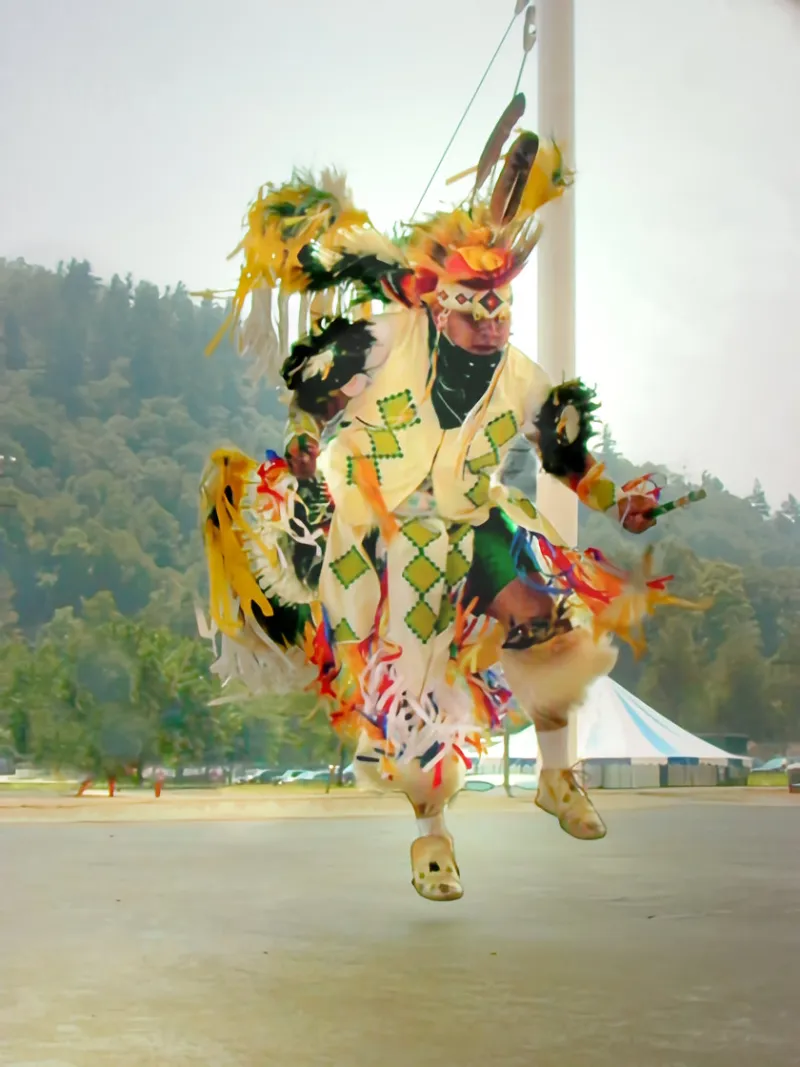
Photo: AjarnRichard, CC BY-SA 4.0, via Wikimedia Commons
There is a word in the Lushootseed language of the Puget Sound Coast Salish peoples — sčədadxʷ — that refers to salmon not merely as a food source but as a relative, a being whose fate is bound inseparably to the fate of the human community that depends on it. This is not metaphor. It is a worldview that shaped millennia of sustainable harvest, encoded in ceremony, oral tradition, and the kind of place-specific ecological knowledge that no university curriculum has yet managed to fully replicate.
The suppression of that knowledge — through treaty violations, dam construction, commercial overfishing, and the systematic displacement of Indigenous peoples from their ancestral waters — represents one of the gravest environmental and human rights failures in American history. What is less widely understood is that the reversal of that suppression is already underway, and that conscious consumers have a meaningful role to play in accelerating it.
A Legal Foundation Older Than the State
The rights of Pacific Northwest tribal nations to harvest salmon are not a recent political concession. They are older than Oregon, older than Washington, and in many cases were explicitly reserved by treaty at the moment those states were negotiated into existence. The 1855 Stevens Treaties, signed between the United States government and dozens of tribal nations across the Pacific Northwest, guaranteed tribal peoples the right to fish at "all usual and accustomed grounds and stations" in perpetuity.
For nearly a century, those guarantees were honored primarily in the breach. Commercial fishing interests, state regulatory frameworks, and federal dam-building projects systematically excluded tribal fishers from waters their ancestors had managed for generations. The 1974 Boldt Decision — United States v. Washington — marked a legal turning point, affirming that treaty tribes were entitled to 50 percent of the harvestable salmon in Washington State. It was a landmark ruling that ignited fierce resistance from non-tribal fishing interests and required decades of subsequent litigation to enforce.
Today, the legal architecture of tribal fishing rights is more secure than at any previous point in the post-contact era. What is being rebuilt now is something more complex: the ecological, cultural, and economic infrastructure to exercise those rights fully.
Traditional Ecological Knowledge as Conservation Science
The Yurok Tribe of Northern California, the largest tribal nation in the state, has been engaged for years in a sophisticated salmon restoration effort along the Klamath River — the same river whose partial dam removal we have covered previously in these pages. What distinguishes the Yurok approach is not merely the removal of physical barriers to fish passage, but the reintegration of traditional ecological knowledge into fisheries management decisions.
Yurok fisheries biologists and tribal elders work alongside academic researchers to monitor salmon runs, assess habitat conditions, and guide harvest decisions. This is not a token consultation process. Tribal knowledge-holders contribute observations about fish behavior, water temperature thresholds, and riparian plant communities that complement and sometimes correct the findings of conventional scientific monitoring. The result is a management framework that is both more comprehensive and more adaptive than either traditional science or traditional knowledge could achieve independently.
Similar models are operating across the region. The Lummi Nation of northwestern Washington operates one of the most rigorous wild salmon monitoring programs on the Pacific Coast. The Quinault Indian Nation manages a commercial salmon fishery that integrates ceremonial harvest protocols with export-quality processing standards. The Swinomish Indian Tribal Community has developed a climate adaptation plan for its fisheries that draws explicitly on ancestral observations of environmental change.
These are not heritage projects. They are functioning, scientifically sophisticated conservation enterprises — and they are producing some of the most responsibly harvested salmon available to American consumers.
The Producers Leading the Movement
For consumers who want to translate values into purchasing decisions, several Indigenous-led salmon operations offer direct access to their products.
Lummi Island Wild, operating in association with the Lummi Nation, uses reef net fishing — a traditional harvest method that allows non-target species to escape and minimizes habitat disruption to a degree that conventional gear cannot match. Their sockeye is among the most sustainably certified salmon available in the United States, and the operation explicitly reinvests revenue into tribal fisheries restoration.
Salmon Sisters, co-founded by Indigenous Alaskan women, combines commercial wild-caught salmon with a mission of cultural storytelling and community investment in Bristol Bay and Southeast Alaskan fishing communities. Their supply chain is transparent and their advocacy for Indigenous fishing rights is woven into every product they sell.
The Makah Tribe of the Olympic Peninsula operates a commercial fishery rooted in harvesting traditions that predate European contact by thousands of years. Purchasing Makah-harvested salmon is a direct act of support for a sovereign nation whose relationship with the Pacific has never been interrupted, only suppressed.
Seeking out these producers requires slightly more intentionality than reaching for the nearest grocery-store fillet. Community-supported fishery programs, specialty seafood retailers, and direct-to-consumer online platforms have made that intentionality increasingly practical.
Environmental Justice Is a Seafood Issue
The connection between Indigenous fishing rights and broader environmental justice is not incidental. Tribal nations whose treaty rights were suppressed suffered not only cultural loss but severe economic harm, as the commercial value of salmon was captured almost entirely by non-Indigenous fishing interests. The restoration of those rights is simultaneously an act of ecological repair and economic reparation.
Conscious consumers who have built purchasing habits around organic produce, fair-trade coffee, and humanely raised meat are well-positioned to extend that same framework to seafood. The question to ask is not only whether a salmon was caught sustainably in the ecological sense, but whether the people who caught it were compensated justly and whether the harvest supported or undermined the sovereignty of the communities most invested in the long-term health of those fish populations.
On both counts, Indigenous-led fisheries consistently offer the most affirmative answer available in the American marketplace.
What the River Teaches
There is a reason that Pacific salmon return to the precise tributary where they were born, navigating thousands of miles of open ocean to complete a cycle that has continued for millions of years. The river is not merely a habitat. It is a memory system — biological, cultural, and ecological simultaneously.
The tribal nations of the Pacific Northwest have been custodians of that memory through conditions that would have broken less resilient peoples. They are now, with hard-won legal standing and centuries of accumulated knowledge, reasserting their role as the salmon's most committed advocates.
At Golden Gate Salmon, we believe that the future of wild salmon in America runs through Indigenous sovereignty. Not as a sentiment, but as a sourcing principle. When you choose salmon harvested by tribal fishers operating under traditional ecological protocols, you are not merely purchasing a premium product. You are participating in one of the most consequential conservation and justice stories unfolding on the American West Coast.
The river remembers. So should we.